The Ancient Mexicans beat me to it with my God of rain master of the raindrops type guy.
(Nahuatl: “He Who Makes Things Sprout”)
Tlaloc was a member of the Patheon gods to the Aztecs. He was the lord of the rain and the master of thunder, was a spirit who controlled the four kinds of rain and brought life and fertility to the earth.
Tlaloc was not only highly revered, but he was also greatly feared. He could send out the rain or provoke drought and hunger. He hurled the lightning upon the earth and unleashed the devastating hurricanes. Tlaloc was also considered the ruler of the Tlaloque - a motley group of rain, weather and mountain Gods. The Tlaloque, it was believed, could send down to the earth different kinds of rain, beneficent or crop-destroying. In later Postclassical Mexico Tláloc was believed to live in caves which were suitably damp for a rain god but also filled with magnificent treasures. In sculpture, especially stone, Tláloc’s mouth may be in the form of a volute or a corn cob symbolising how important the god’s life-giving rain was to Mesoamerican agriculture.
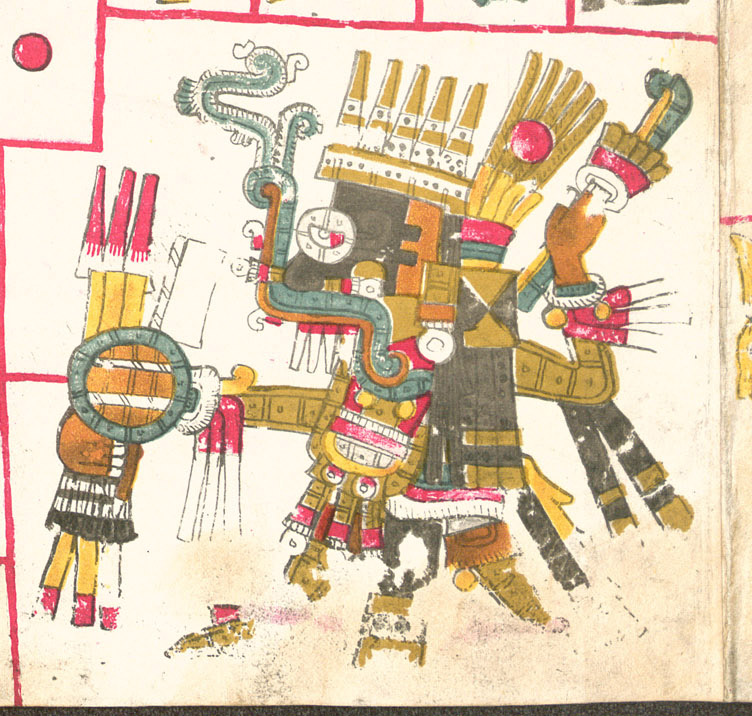


mask of Tlaloc
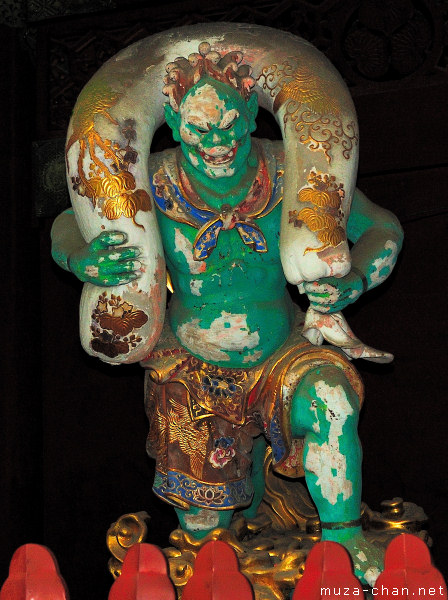
Fujin - Japan
Japanese God of Wind and one of the oldest Shinto Gods.
His bestial character is transcribed by his outfit, which is made of a leopard skin, and his ruffled look, caused by the gusts of wind he lets out of his big bag of wind he carries on his back. He's usually depicted with 4 fingers - one for North, South, East and West. This god is very important for the Japanese who fear him especially for the typhoons he produces. But, Fujin isn’t only a threatening god, since he’s also seen as a saviour by the Japanese people. In 1274 and 1281, he allegedly protected Japan from Mongol invasions by striking the Mongols with storms at sea.
This divine intervention is called “Kamikaze”, the divine wind, by the locals. It was this event that gave the name to the suicide attacks committed by the Japanese special forces during the Second World War. This term has remained in the current language to describe similar sacrifices.


Raijin - Japan
Raijin, also known as Kaminari-sama and Raiden-sama, is the Japanese god of thunder, light and storms. This is one of the most feared deities of Japanese culture. In Japan, adults often tell children to cover their belly button when a storm approaches, because Raijin could eat it?? Like the Norse god Thor, he’s armed with hammers with which he knocks on drums to create the sound of lightning. Most of the time, he’s depicted with only three fingers on each hand. Each of the fingers representing the past, the present and the future. He often has red skin, which highlights his demonic character. In dry seasons, the most faithful farmers pray to Raijin for rain and thunder. In addition to rains, thunder has a reputation for helping fertilise rice in Japan. The custom says that a field that has been struck by a lightning will offer a good harvest.
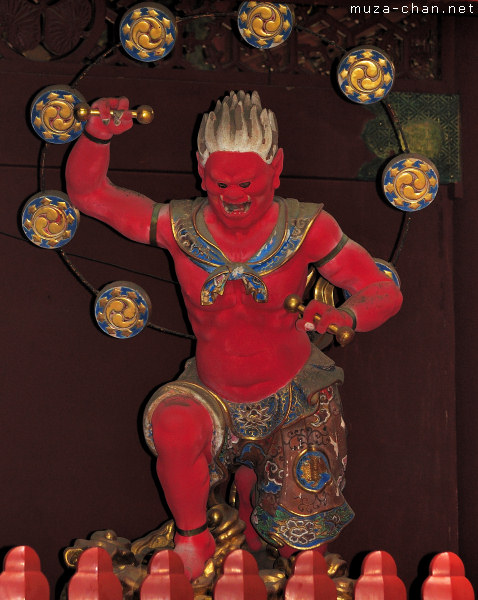
Despite their rivalry for control of the sky, Raijin and Fujin are often represented together in Japanese traditional arts. Although they’re feared for their temper, both gods are often seen as protectors. That’s why they are the guardians of many places of worship in Japan.
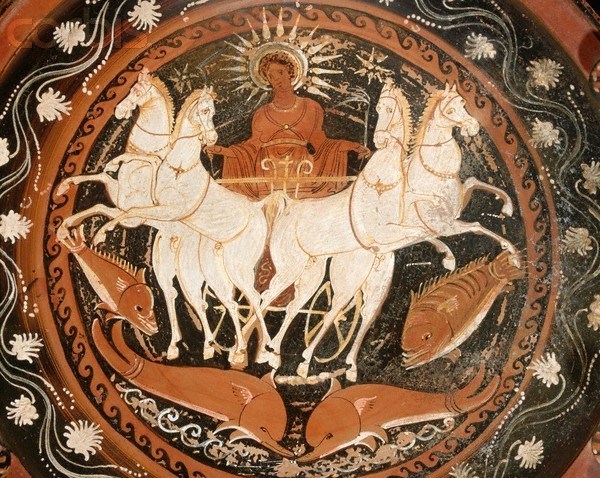
Halios - Greece
Helios was the god / personification of the Sun in Greek mythology. He was thought to ride a golden chariot which brought the Sun across the skies each day from the east (Ethiopia) to the west (Hesperides). Because Helios was in the sky all day looking down on the earth, people assumed he saw and heard everything that went on in that domain; thus, both gods and humans called on him as a witness to various events or oaths sworn.

No comments:
Post a Comment