Hans Christian Anderson
"Poet with the quill and scissors"
Andersen created these beautiful paper cuts as a hobby, its thought he made more than 400 in his life, usually to give as presents.
"When Andersen began to turn the coloured pieces of paper around the steady tips of his scissors, none of the children around the table knew what was going to happen. He liked to start by talking a little, and in doing so would incorporate an improvised fairy-tale relating to the theme or subjects of the paper-cut. Frequently he would stop in order to add a new longitudinal or transverse axis on the paper so as to break the symmetry and provoke new angles and perspectives. These corresponded to the devices he would employ as a storyteller, whether orally or in writing, when he started "editing" - in a filmic sense - the chronology, or suddenly reshuffled the composition in order to introduce new angles, scenes and persons." - Hans Christian Andersen Museum, Denmark
Spontaneity of stories - how they can be created in that moment, influenced by the surrounding or who you are telling them to. Paper cutting means no turning back, if you chop the wrong bit, tough, how you mould your story around that mistake? Theres also the joy in making folded symmetrical pieces and then the unfolding of the image, and in turn the unfolding of that story.
His paper cuts are incredible - they look so contemporary with the shapes and colours and yet were created in the 19th century.
"Andersen's silhouettes are always connected to his life story,"

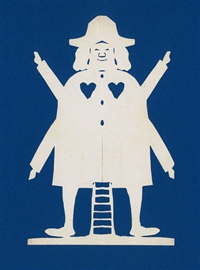


Man with Turban (1871)
"In the last years of his life, Andersen enjoyed so-called blotchography, an experimental technique based on ink blotches that, mostly by chance, drip onto paper. Inspired by this coincidental form, tiny pictures like this one emerged, in which Andersen, again, recalled memories from his travels."

Wycinanki
https://www.polartcenter.com/Wycinanki_Paper_Cuts_s/169.htm:
"Just when and why this art form began to flower in Poland seems a matter of some uncertainty. Some say it goes back to the time when few farm houses had glass windows. To keep out the elements, peasant farmers hung sheep skins over the window openings. Then, to let in some light and air, they took their sheep shears and snipped small openings in the skins, and these were soon recognized as decorative as well as functional."


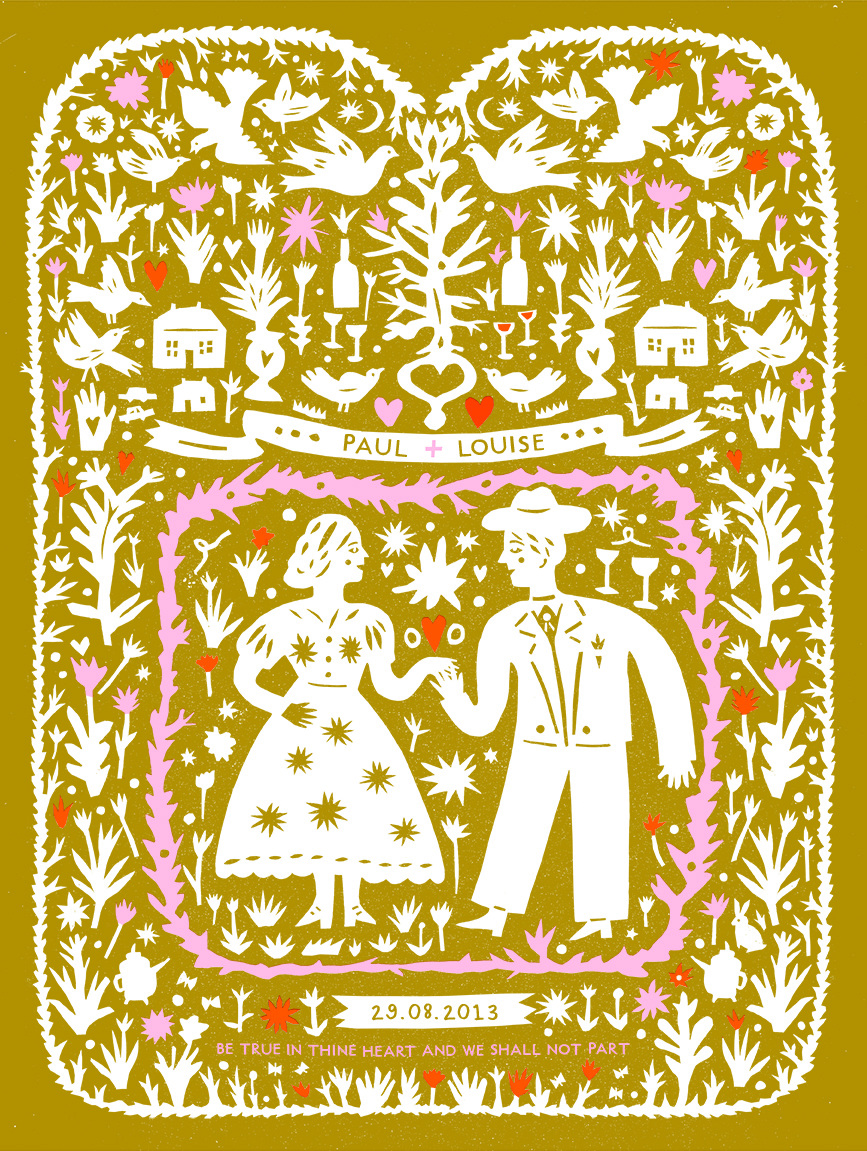
I think its interesting how this craft and the motifs has been taken and adapted by contemporary illustrators and designers today:
Eg Rob Ryan

The Printed Peanut:
Shadow Play / Puppetry
Ancient form of storytelling and entertainment and the earliest animated technique in the world. Shadow puppet theatre likely originated in Central Asia-China or in India in the 1st millennium BCE.
Incredible to watch shadow puppet masters at work - they must create their own puppets and create their own stories and puppeteer them. It is a personal craft, intrinsically linked in the heritage and beliefs of the creator, but also for the audience who watch and celebrate the craft and history.
Utmost importance of preserving and protecting traditional crafts and heritage

No comments:
Post a Comment